

What Building Better Systems Taught Me About Time, Focus, and Purpose
January 20, 2026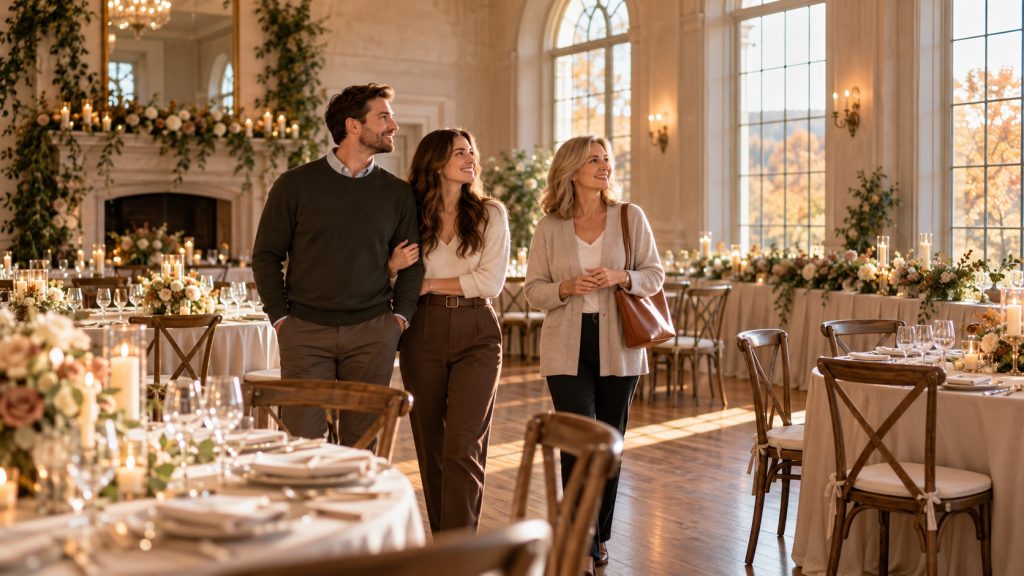
At a Glance: Before booking a wedding venue in Buffalo, Niagara, or Rochester, ask for the complete cost, a realistic guest layout, a specific weather backup, and a written timeline. Then check vendor rules, guest access, and how the space works for photographs, vows, and speeches. The right venue should support the celebration you want and make the practical details clear.
A beautiful room can earn a place on your shortlist in seconds. Deciding whether it works for your wedding takes a few more questions.
For newly engaged couples and parents helping with the search, a venue tour is a chance to picture the day and understand how it will run. Bring these nine questions to each Western New York venue you visit, then compare the answers before committing.
Table of contents
- 1. What is the complete cost?
- 2. What layout fits our guest count?
- 3. What is the weather backup?
- 4. What time can everyone arrive?
- 5. Which vendors can we choose?
- 6. How will guests move through the day?
- 7. Where will our important moments happen?
- 8. Who makes decisions on the day?
- 9. What needs to be in writing?
- Your next steps
- FAQ
- Sources
1. What is the complete cost for the wedding we actually want?
Ask for an itemized estimate based on your likely guest count, preferred date, and ceremony and reception plans. A starting price is useful only when you understand what it includes.
Request separate details for room rental, food and beverage, staffing, rentals, setup, cleanup, and any other mandatory charges. Ask how taxes and service charges are handled and whether gratuity is included. Confirm minimum spending requirements and the cost of extending the celebration.
Ask this: “Could you show us an estimate for our plans, including every required charge and the items we would need to arrange separately?”
If a parent is contributing, agree privately on the comfortable spending range before comparing upgrades.
2. What layout comfortably fits our guest count?
Ask to see a floor plan that includes dinner tables, the dance floor, entertainment, and your ceremony if it shares the space. The question is how your celebration fits, rather than simply how many people the building can hold.
Room choice can make a substantial difference. Avanti Mansion lists several event spaces, including the Amore Ballroom and the smaller Amore Library. Ask for the layout and terms for the specific room you would book. Explore Avanti Mansion’s spaces.
Check sightlines for seated guests and leave room for people and vendors to move without squeezing between tables.
Ask this: “Can we see a floor plan for our guest count with every part of our event included?”
3. What exactly happens if our outdoor plans change?
Ask to walk through the backup ceremony location, not just hear that one exists. Find out when the decision is made, who makes it, and whether relocating changes seating, décor, timing, or cost.
A useful local example is the Buffalo and Erie County Botanical Gardens. Its wedding page states that an indoor event space is also reserved when couples choose the outdoor courtyard, in case of inclement weather. Confirm the current arrangement for your event. Read the Botanical Gardens’ ceremony details.
Ask this: “If we use the backup plan, where will guests sit, where will we stand, and what changes on our timeline?”
Make sure you would be happy with that version of the day, too.
4. What time can we, our guests, and our vendors arrive?
Write down access times for getting ready, deliveries, setup, the ceremony, the reception, and cleanup. Ask whether those times differ for your vendors.
Then work backward from the ceremony with your planner, photographer, and videographer. Consider getting dressed, family photographs, a first look if you want one, and travel between locations. Avoid building a schedule that depends on every transition happening instantly.
For celebrations spanning Buffalo, Niagara, or Rochester-area locations, check the actual route and transportation arrangements rather than assuming that a nearby-looking address means a short transfer.
Ask this: “What access window is included, and what happens if setup needs more time?”
5. Which vendors can we choose, and what rules apply?
Ask whether caterers, bartenders, rental companies, or other vendors must come from an approved list. Clarify which recommendations are optional and which requirements are part of the agreement.
Share the venue’s requirements with prospective vendors before booking them. Ask about insurance documentation, delivery arrangements, power access, candles, sound restrictions, and any rules relevant to your plans.
For wedding films, ask your videographer to review filming access and audio arrangements with the venue. Do not assume drone use or access to every space is permitted.
Ask this: “Could we have the current vendor requirements and restrictions in writing before signing?”
6. How will guests move comfortably through the day?
Walk the route from arrival to the ceremony, cocktail hour, dinner, and restrooms. Ask about parking, drop-off points, stairs, elevators, seating, and the route guests will use if the weather changes.
Describe any specific access needs and ask precise questions. A broad statement that a venue is accessible may not answer whether a particular guest can comfortably reach every part of your celebration.
If you are considering a downtown Rochester setting such as the Wintergarden, which describes its location in Legacy Tower, ask for the event-specific arrival and parking instructions. Do not assume they match another city venue’s arrangements. Explore the Wintergarden.
Ask this: “Can you walk us through the route a guest using a mobility aid would take?”
7. Where will our vows, speeches, and family moments happen?
Stand in the ceremony location and imagine the view from a guest’s chair. Ask where speakers will stand, where microphones are available, and which areas are available for portraits or quiet time together.
Tell your photo and video team which moments matter most. A parent’s speech, personal vows, or a few minutes with a grandparent may deserve space in the schedule.
Ask your filmmakers to assess light, sound, and camera positions for the actual plan. Attractive windows or a dramatic backdrop are a starting point, not a guarantee of a particular filming result.
Ask this: “Can our photographer and videographer review the ceremony and reception setup before we finalize the timeline?”
8. Who makes decisions and answers questions on the wedding day?
Find out who your venue contact will be and what that person’s role covers. Clarify who handles deliveries, setup questions, timing changes, and issues that cross several vendors.
If you also hire a planner or coordinator, ask how the roles work together. Write down who can approve a change and who should receive urgent calls.
Parents can be helpful contacts when they want that responsibility. Give each person a clear, manageable role rather than making one family member the default answer to every question.
Ask this: “Who should vendors contact on the day, and which decisions still need our approval?”
9. Which promises and arrangements will be included in writing?
Before paying a deposit, compare the written agreement with your tour notes. Check that it identifies the date, booked spaces, access times, included services, payment schedule, and relevant policies.
Ask for clarification when something is missing or unclear, including changes to guest count, postponement, cancellation, and weather arrangements. If you need help understanding the agreement, seek appropriate professional advice before signing.
Ask this: “Can we confirm that the spaces, inclusions, and backup arrangements we discussed are reflected in the agreement?”
Keep the final documents and updated vendor instructions somewhere both partners can access.
Your next steps: compare answers after each tour
Use the same short comparison sheet for every venue:
| Decision | Record after the tour |
|---|---|
| Cost | Itemized estimate and remaining unknowns |
| Guest experience | Layout, arrival route, and access questions |
| Weather | Specific backup space and decision process |
| Timing | Access window and travel considerations |
| Vendors | Requirements and restrictions |
| Memories | Ceremony, speech, and portrait arrangements |
Each partner can choose their three most important priorities before comparing notes with family. Follow up on unanswered questions in writing, then decide which venue best supports your plans.
For more local inspiration, explore Buffalo Wedding Venues We Love to Film.
FAQ
Should we choose a venue or a wedding videographer first?
A confirmed venue and date give other vendors a clear event to discuss. If a particular filmmaker is a priority, ask about availability while evaluating dates, then coordinate your decisions. An inquiry does not reserve a date unless the vendor confirms its booking requirements have been met.
How can a mother of the bride or groom help with venue tours?
Offer to take notes, track questions, or compare estimates if the couple would welcome that help. Agree on the role beforehand and let the couple describe what matters most to them.
Do we need a separate visit with our photo and video team?
Ask the team what would be useful. A walkthrough, floor plan, photographs, or a conversation with the venue contact may help them prepare. The right approach depends on the location and your event plans.
Should we book a venue if some details are still undecided?
Separate optional styling decisions from essential booking terms. Before committing, clarify the date, cost structure, spaces, access, and requirements that could affect whether the venue works for you.
Plan a wedding day you will want to relive
Your venue creates the setting. The people, voices, and moments make it yours. Black Horse Videography creates cinematic wedding films that preserve those connections. Explore our wedding film packages or inquire about your wedding date as your plans take shape.
Sources
Venue details reviewed October 21, 2026. Confirm current arrangements directly with each venue. Examples illustrate planning questions and are not a ranked venue shortlist.


